Turning price lists into online ordering.
Produce sellers on Silo still took orders by text, phone, and walk-up. Silo had no ordering product, so I designed it from scratch: an interactive catalog for small distributors, and EDI ordering explored with larger sellers.







Orders were happening everywhere except Silo.
Silo already handled sales and purchase orders. Taking the customer’s order wasn’t part of it.
Lead designer, from first research to shipped UI.
I worked with the engineering team, and partnered with the PM and engineering lead to figure out what to build and how to get there.
Two very different sellers.
I had to understand both.
Customer success got us in front of sellers early, so I had feedback while we were still defining the work.
Larger sellers. I worked with 2 to 3 prospects as design partners and mapped how they order today.
- 1Order arrives by email
- 2Reviews it in the EDI portal
- 3Approves or adjusts
- 4Re-creates the approved order in a second system
- 5Reconciles the invoice by email
- 1Pulls the PO from a retailer’s portal
- 2Logs it on a master board in Excel
- 3Copies the goods into inventory software
- 4Handwrites everything onto a paper file
- 5Enters it into accounting to invoice
- 1Uploads invoices every morning
- 2Checks for confirmed or adjusted orders
- 3Pulls up each order in a second system
- 4Matches dates and quantities by hand
- 5Marks it shipped and submits
How three prospects ordered today, mapped from our sessions. Names and tools removed.
Small distributors. I visited them on-site, and met weekly with one operations manager who helped shape the pricing lists, emails, and catalog.
Nearly every order was a repeat. Same customer, same items, week after week. And nothing safeguarded them.
Explore the hard version. Ship the simple one.
Our design partners were larger prospects who needed EDI. Our actual users were small distributors, and we didn’t have the customer base for complex EDI yet. We went back and forth, and landed on a split.
The bet: make it easy for sellers to keep customers current, and easy for customers to order. Customer templates and pricing lists came first.
I also worked with the payments product owner to improve the Silo Pay customer portal. I defined that separately, and it fed back into this work.
Mapping how customers get in
Growth depended on invites. Sellers invite customers, and customers can invite vendors. Before designing screens, I mapped every invite case, including the messy ones.
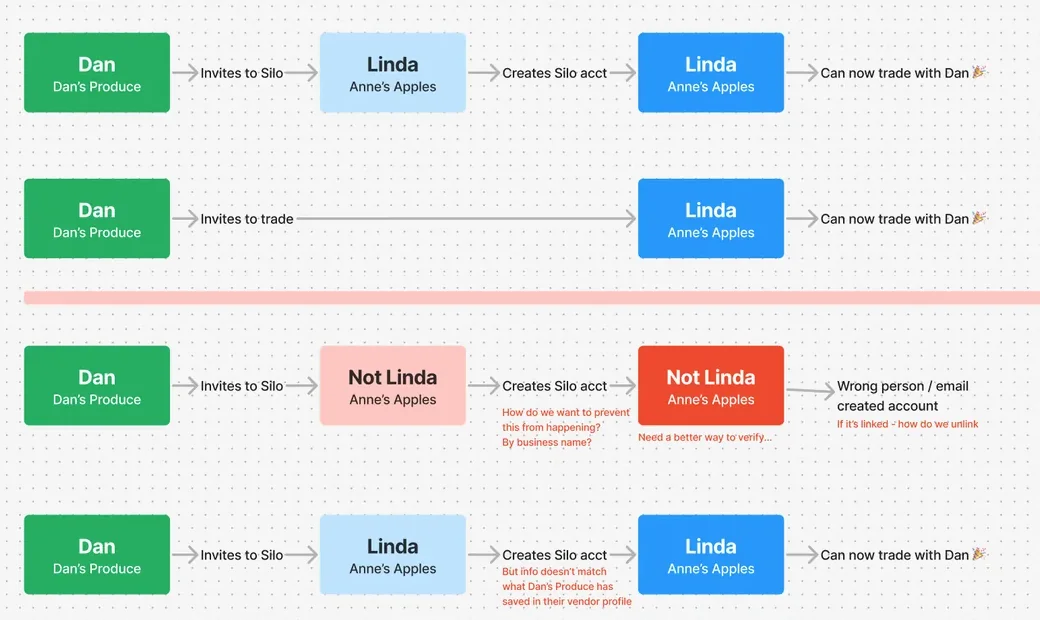
One ordering problem, built at two levels of complexity.
The EDI exploration EXPLORED
Built with design partners, for big retail orders. The workflow adds two loops to a standard order. Before it ships, both sides agree on price and quantity. After it ships, they reconcile the invoice.
- 1Order arrives from the retailer
- 2Seller accepts, adjusts, or rejects
- 3Back and forth until both sides agree
- 4Confirmed
- 1Pulled
- 2Shipped, scheduled by seller or buyer
- 3In transit
- 4Received by the customer
- 1Invoice auto-generated
- 2Buyer accepts or rejects
- 3Seller reconciles updates
- 4Final invoice sent
One retailer order can span several vendors. Sellers can view it by item or by vendor, and every adjustment stays visible next to the original.
We didn’t have the customer base for EDI yet, so release one brought the same ideas to the sellers we already had.
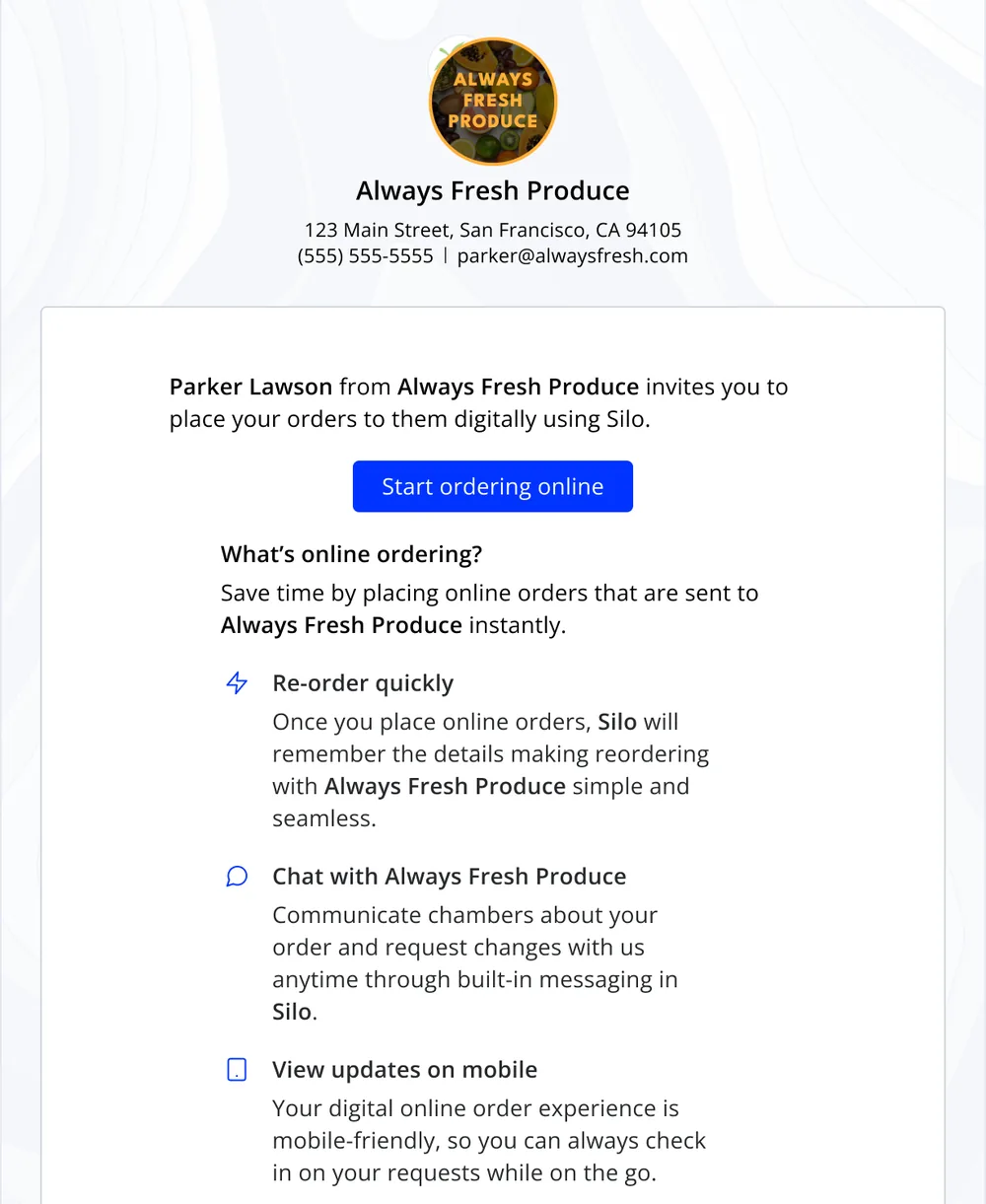
Email system. There’s an email for every step of the online ordering journey, from the invite to adjusted orders to the final confirmation. It was important to define the content strategy and branding guidelines, then build them into the design system.
Keeping orders moving
Statuses. Orders go back and forth between customer and vendor. Research shaped the statuses so it’s always clear who changed what, and what’s new. They show in the orders list and at the top of each order.
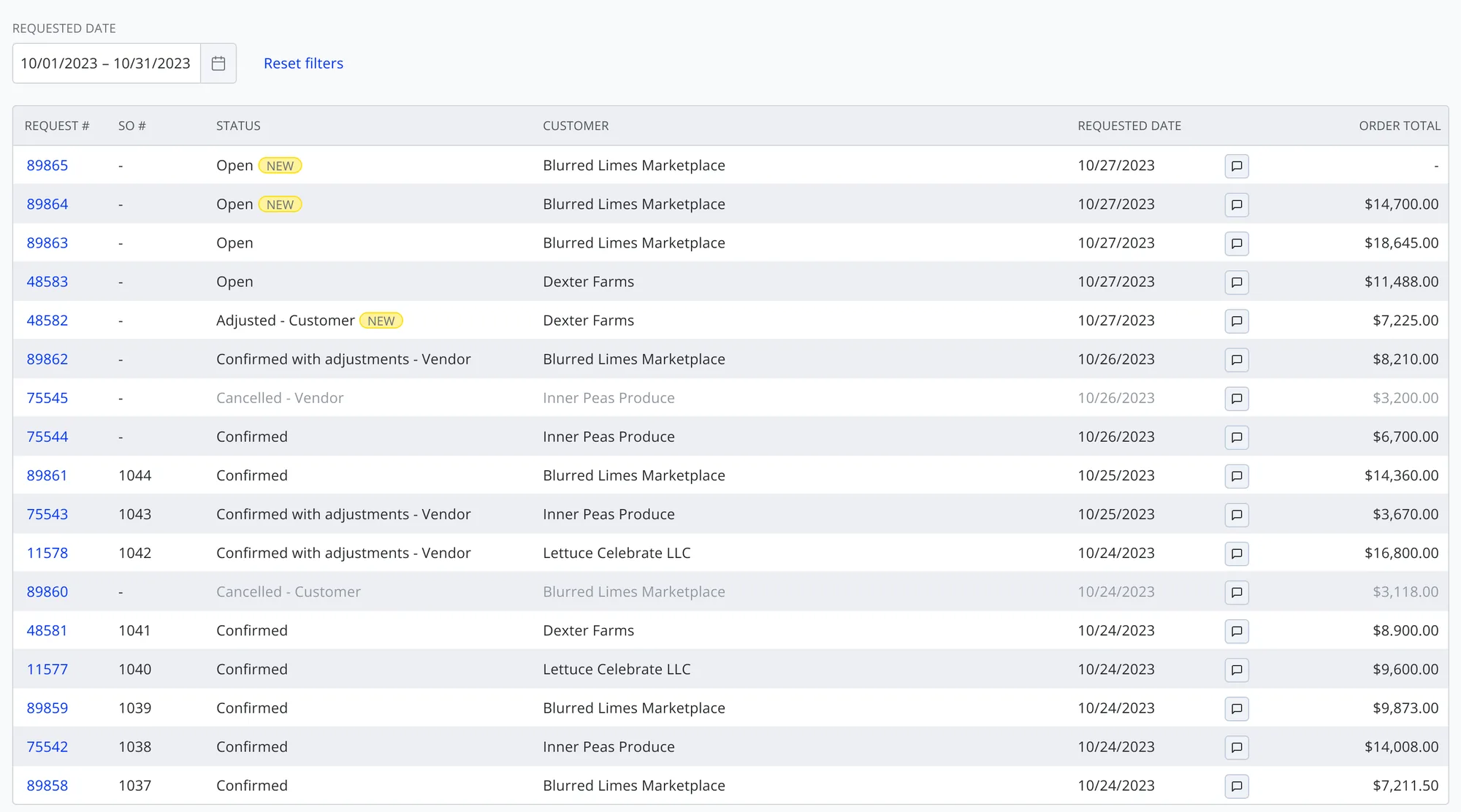
Final designs
{{ devNote }}
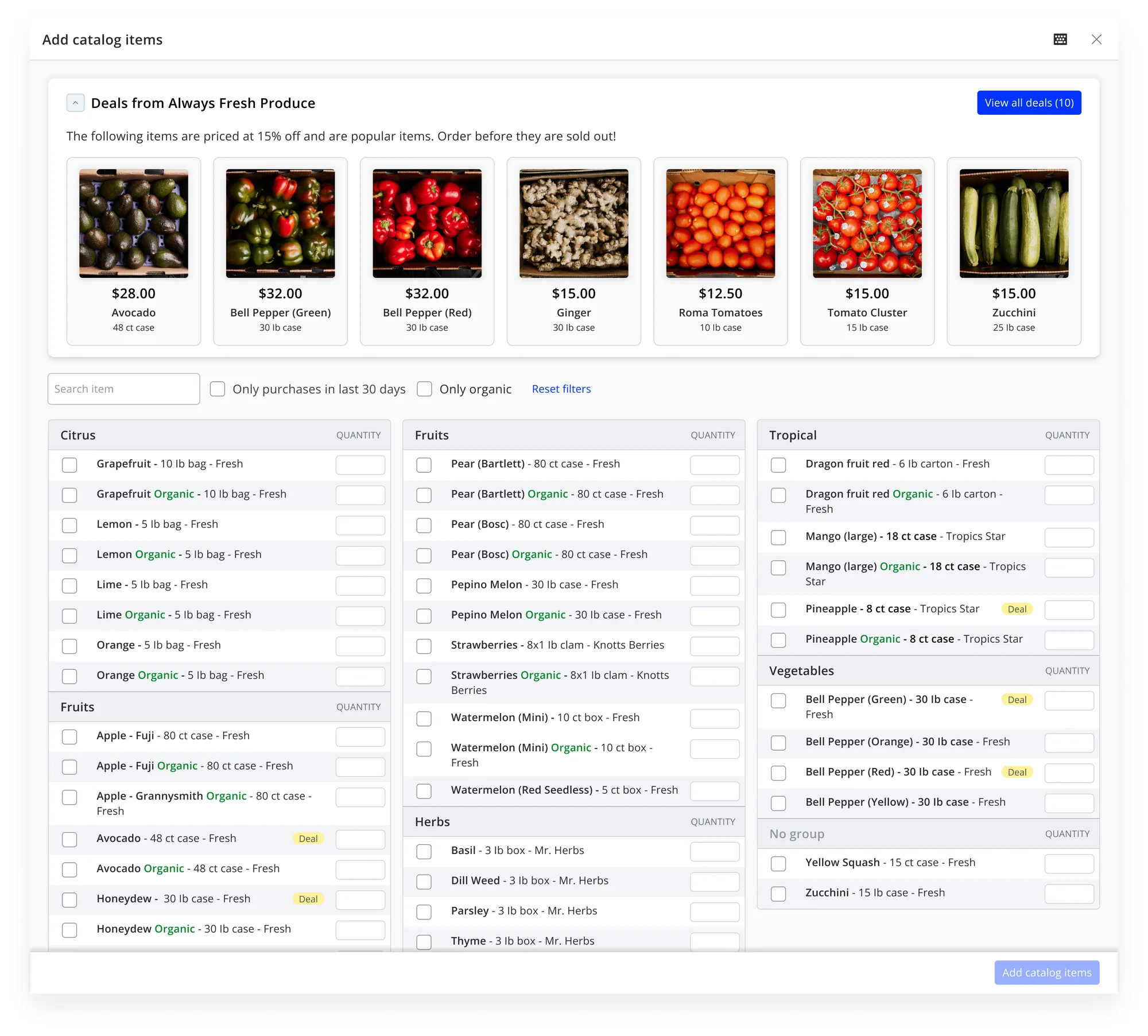
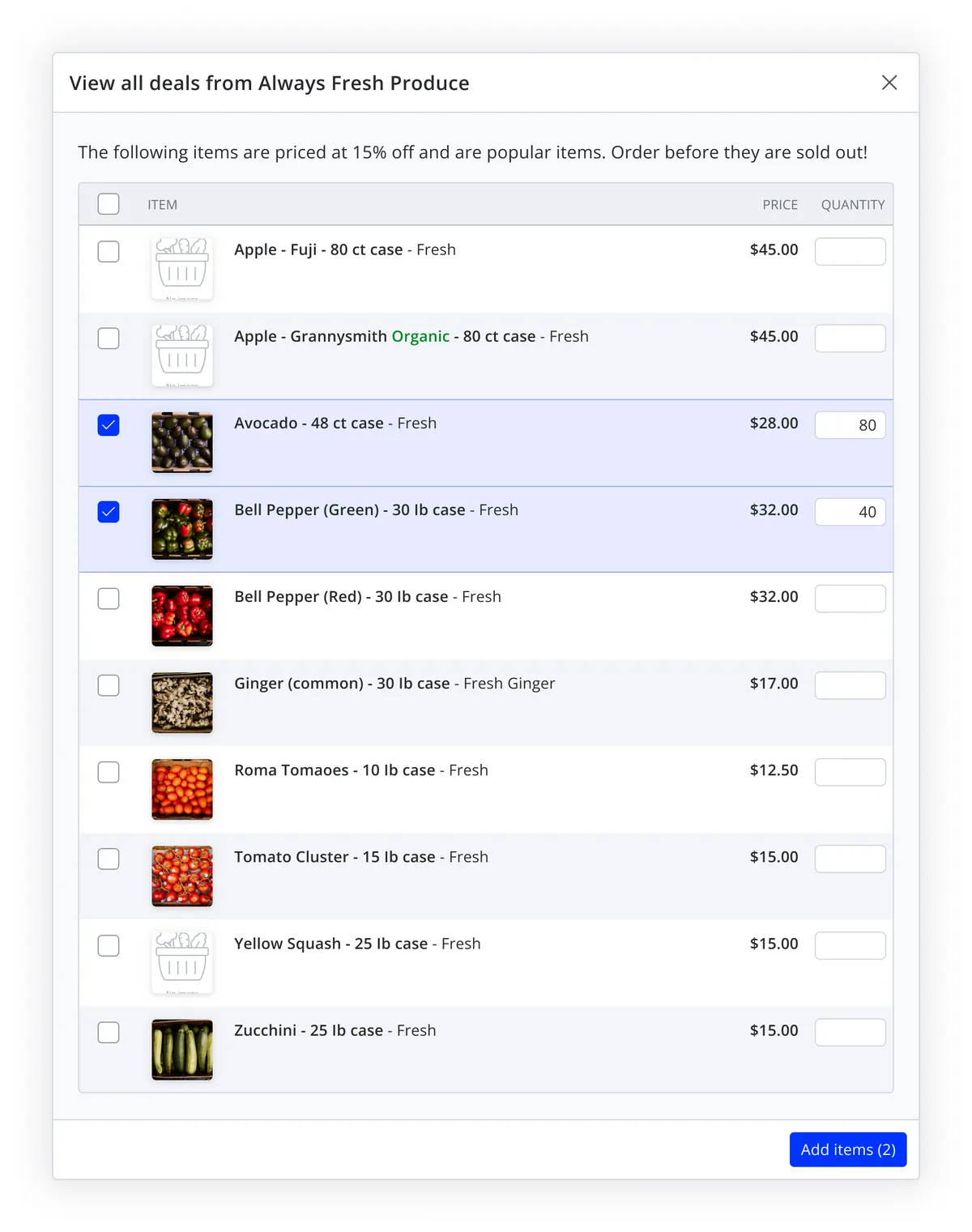
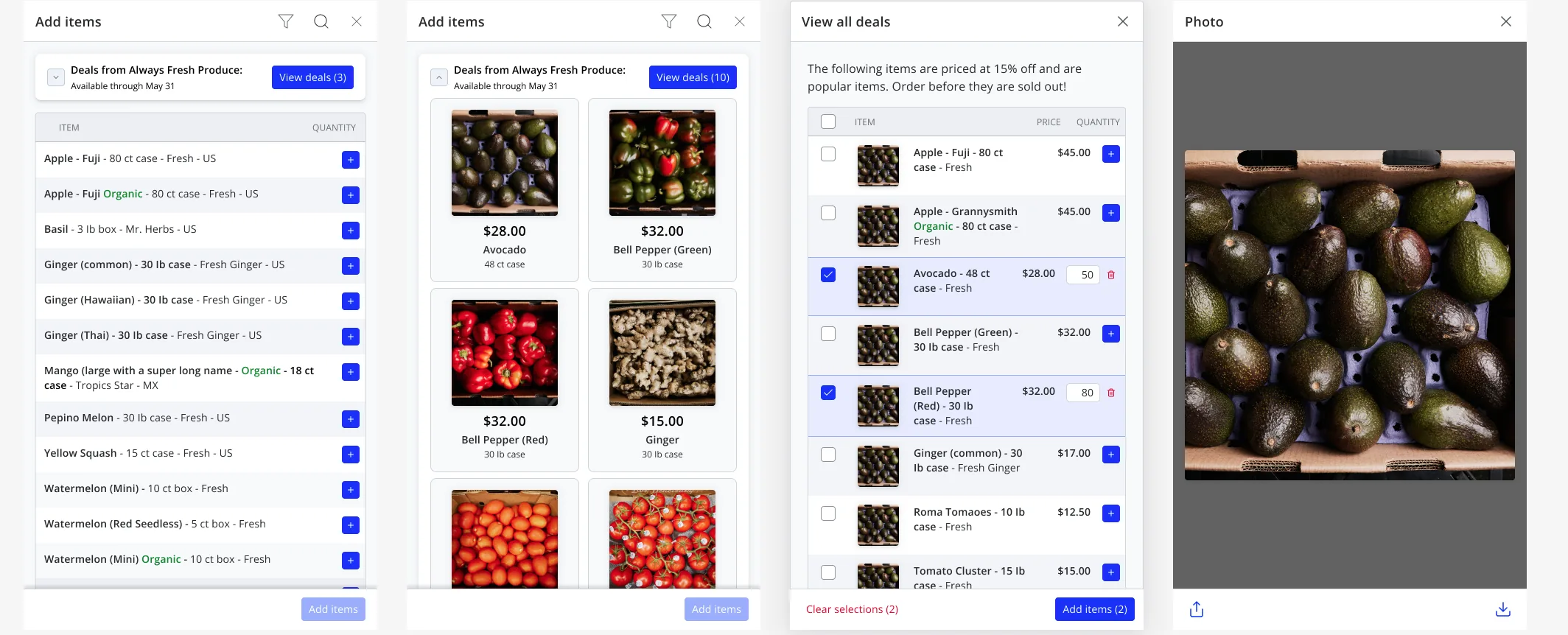
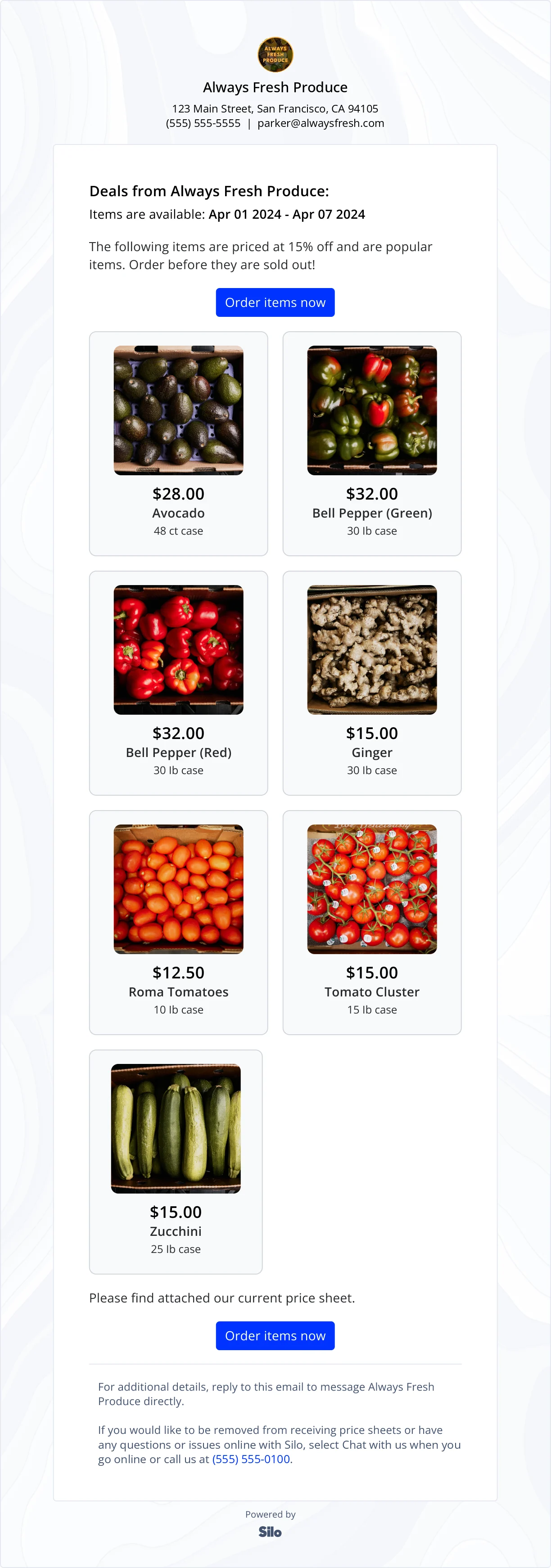
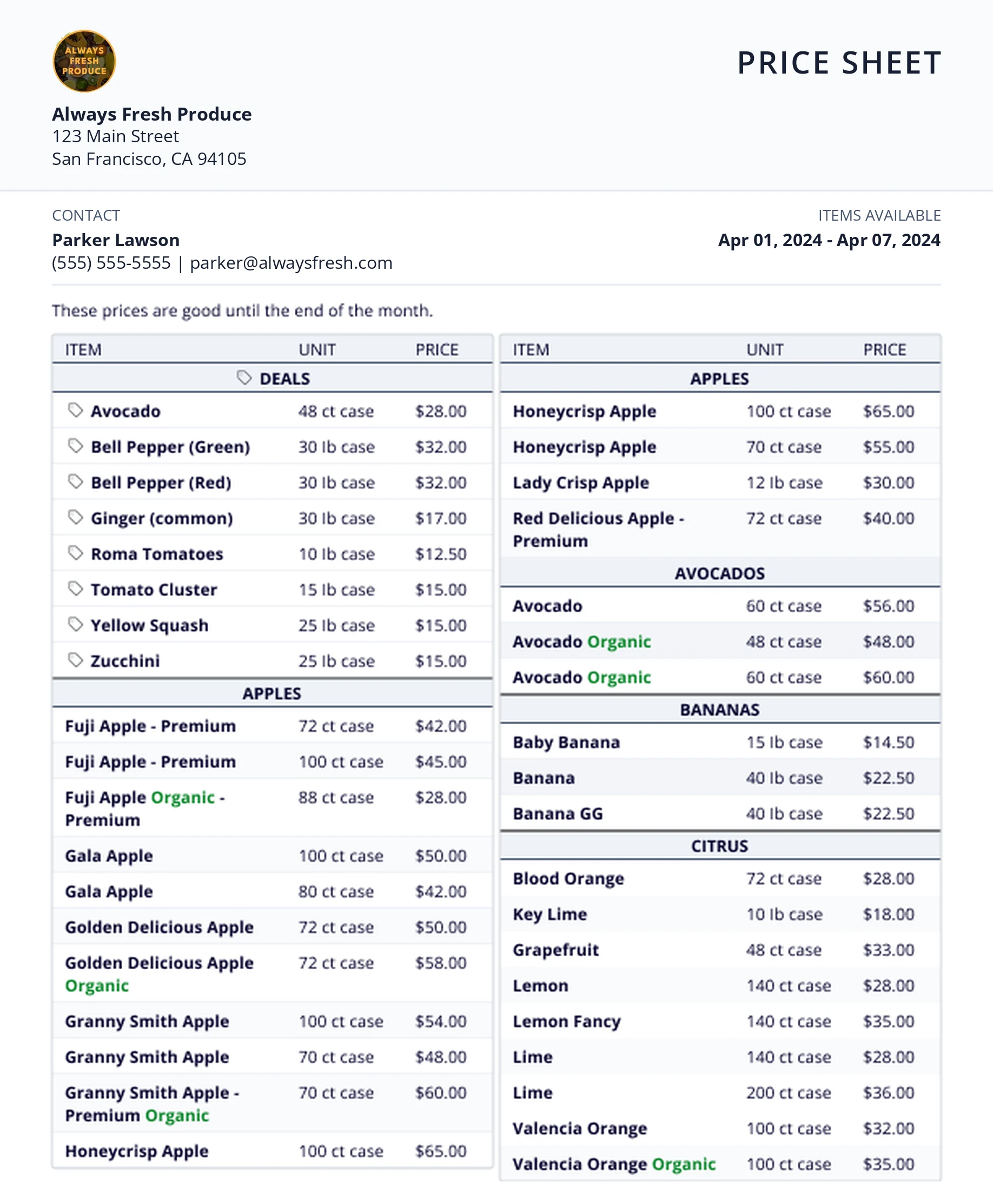
Customer success carried the message.
We told small distributors it was coming during on-site visits, so it didn’t land cold. Release one went out two ways. Customer success upsold it to current customers, and it shipped in our general release.
The invite loop did the rest. Every seller who invited customers brought new accounts into Silo.
The EDI prospects were locked into contracts with a competitor. Switching is expensive, so they couldn’t move until those ended. We kept building with them in the meantime.
Ordering moved into Silo,
and growth followed.
Greenfield, zero to one. I took it from first research to a shipped release.
We didn’t have the base for complex EDI yet. Building for current sellers gave us real usage while the bigger bet stayed alive.
The win wasn’t a clever feature. It was making the repeat order fast and hard to get wrong.
Emails, print, mobile, and Spanish all had to work for customers to make the switch.
If I did it again, I’d change two things. I’d find more design partners earlier to push the EDI timeline. We had a few, and their contracts set the pace. I’d also set success metrics with the PM from day one, so the outcomes are easy to trace.