Bringing membership
contracts to the branded app.
Mindbody's branded app lets studios run their own white-label mobile app. As the UX design lead on the consumer team, I led the membership contract experience inside it: choosing a pass, reviewing what you'll pay, agreeing to the terms, and checking out.
Memberships needed to work in each studio's own app.
Mindbody's branded app lets a studio run a white-label mobile app under its own branding. Membership contracts bill a client on a recurring schedule instead of one purchase at a time.
To buy a membership contract, clients had to go through the older web experience. But members are always on the go, and they wanted to buy directly in the app on their phone.
Fixing that became a priority as a business goal, and it served both sides: it met what members needed, and it gave studios an easier way to sell memberships. Recurring pricing options and packages weren’t sold in the app, but they were a top client request, because contracts create consistent revenue.
The consumer team was tasked with building the membership contract experience into the branded app. It shipped on iOS and Android.
UX design lead on the consumer team.
I led the contract experience in the branded mobile app, from picking a pass to confirming the purchase. As a team, we also drove improvements to the overall checkout, including checkout best practices and added features such as split payments and promo codes.
A dedicated visual designer moved the mobile design system further, checking it against the audit of the rebranded app as we collaborated on this project and beyond. A dedicated UX writer made sure the terminology made sense to users.
Make packages and contracts clear, simple, and trustworthy.
The goal was to make buying a membership in the app easier and less annoying, for members and for the studios selling to them. The hard part was clarity: telling simple packages apart from recurring contracts, and earning trust at the moment of purchase.
On the business side, autopays are the most complex pricing option to set up, with customization like grouping several pricing options, adding products and setting recurring billing cycles. The consumer experience had to carry that complexity without adding cognitive load.
Research shaped it from both sides. Earlier research had surfaced the pain points business admins and owners felt from not offering this to their clients, in a branded app and branded experience they were paying a premium for.
- Audited the rebranded Mindbody app, which curates many businesses in one place, to find patterns and interactions to carry over
- Evaluated current workflows in the B2B desktop software and B2C web experiences to understand API and requirement needs
- Ran a competitive analysis of checkout experiences to find best practices
- Story-mapped features to decide how to scope the release
- Reviewed qualitative and quantitative data around contracts during discovery
- Ran unmoderated testing so consumers could evaluate, understand and purchase an autopay in the app on their own
The branded app had no patterns of its own, so I brought them.
Before this, the branded app didn't have defined patterns or components of its own. I'd been part of the team behind the Mindbody app rebrand, supporting the specs and some of the updated features in the marketplace app. That work is a big reason I became the design lead for branded mobile apps. So I started from that system and carried its patterns into the contract experience.
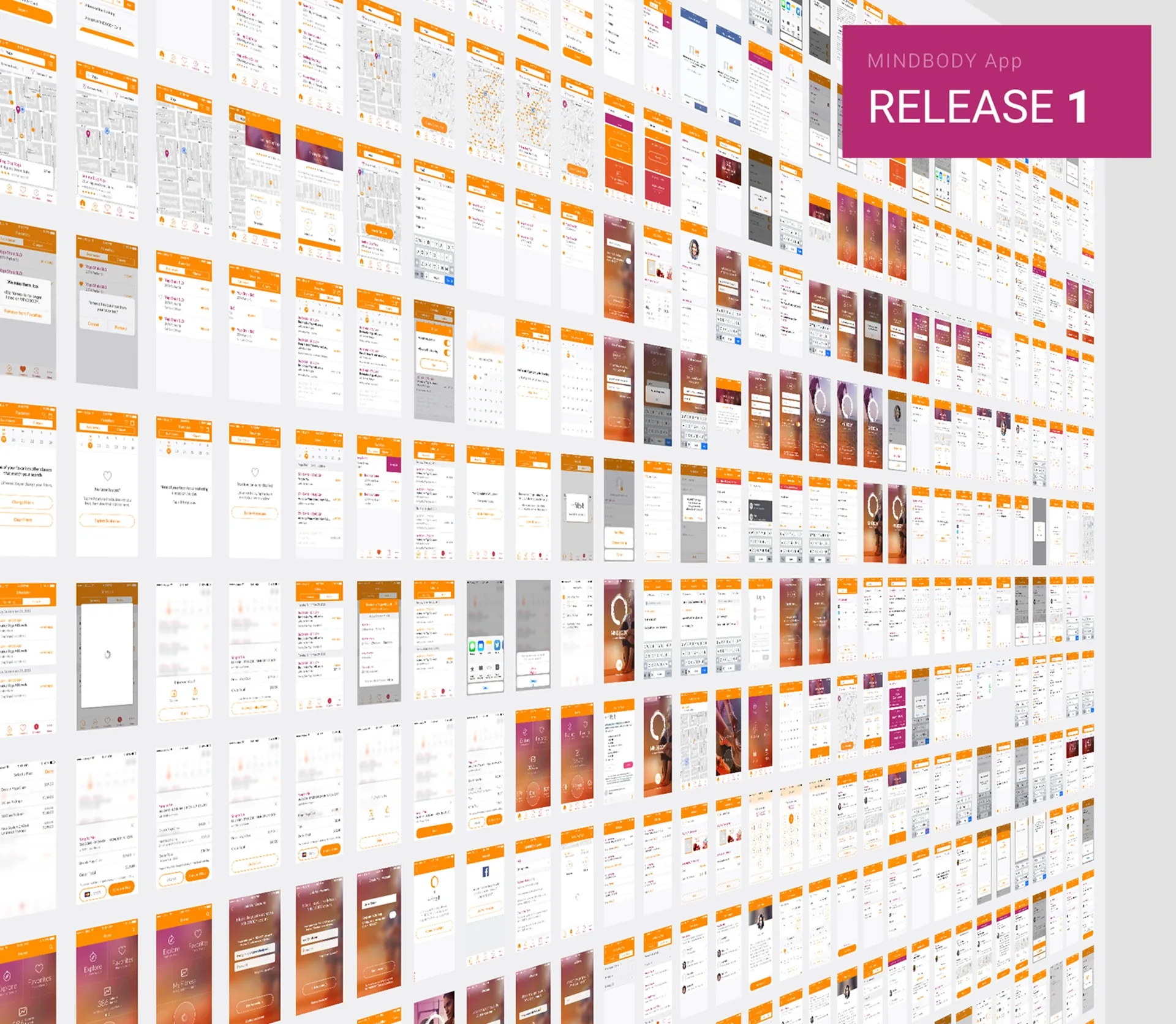
What carried over
- List items: the pass list uses the rebrand's list item structure, so one-time packages and autopays read as one family.
- Flat buttons: Next and Buy follow the primary call to action pattern.
- Headers: the back-and-title header from the rebrand frames every step.
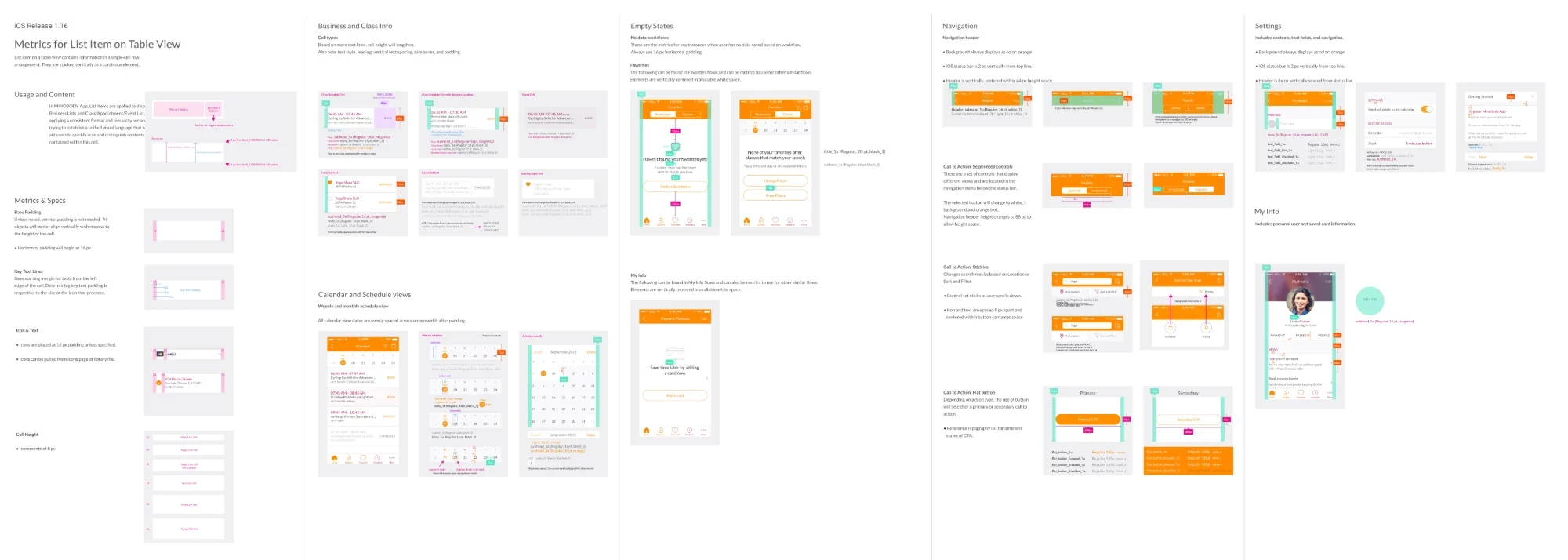
What had to change
The rebrand was one Mindbody brand. The branded app is each studio's own, so color, logo, and wording had to flex while the structure stayed put. Contracts also needed things the marketplace app never had: autopay terms, a payment schedule, and a signature step.
From choosing a pass to a signed contract.
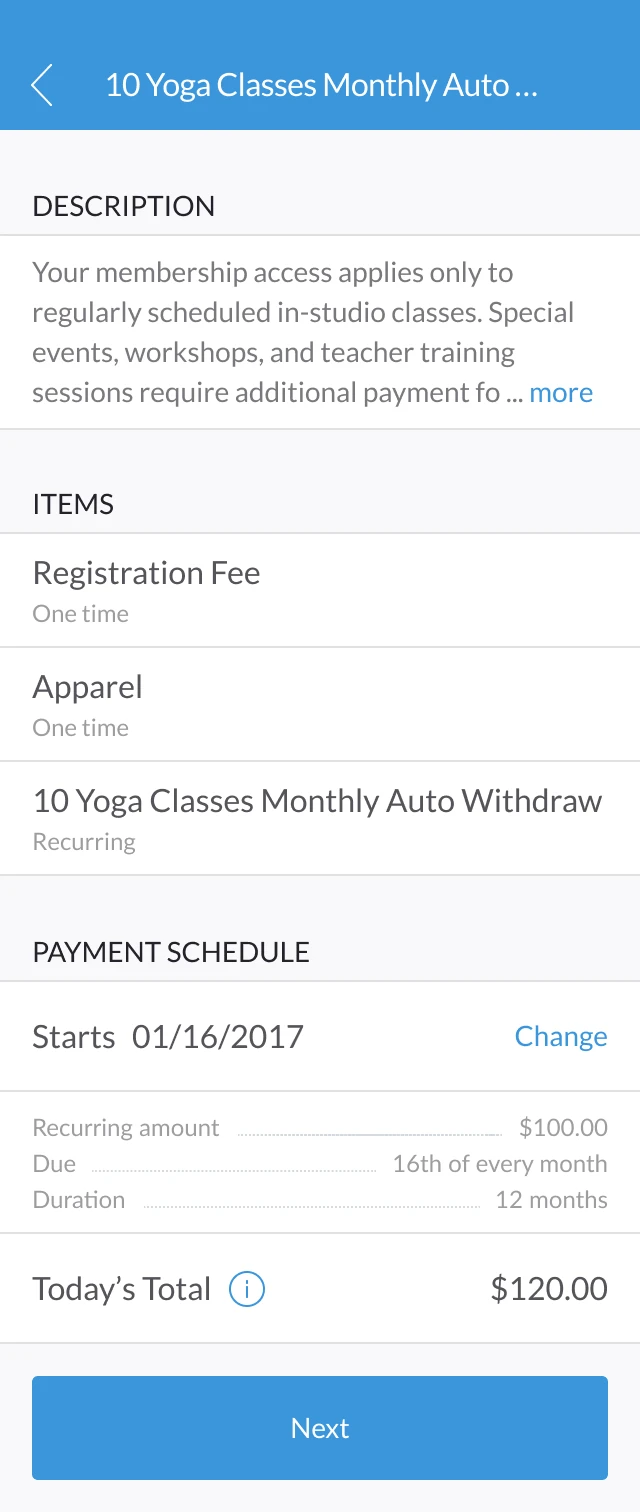
What shipped, and what I learned.
It also surfaced a clear next step: syncing consumer accounts from business logins to the Mindbody login, so bookings and purchases stay consistent.
What we learned
That made us step back as a team to think about the customer journey in the branded app, how people use it and engage with it, and what we could do to help businesses at the front desk too.
Over time, it proved that letting members buy on their own in the app was important. That led to building the branded web experience for contracts.
What I took from it
Branded app bookings doubled in under two years, outpacing the Mindbody consumer app's 60% growth. Source: Mindbody earnings reports.